Serina Chi
A new country and a new career path
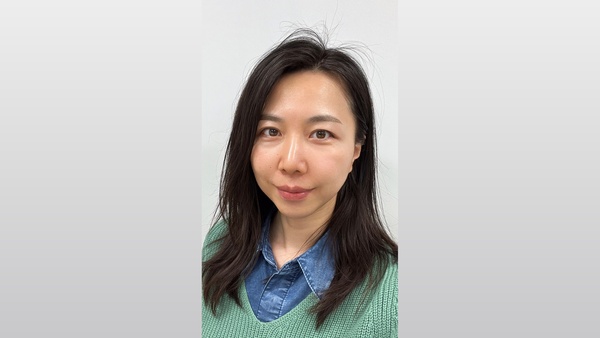
When Serina Chi moved from China to Christchurch in New Zealand, she wasn't simply changing countries. She was leaving a job as a customer manager in a theatre and entering tertiary study for the first time, in a new language and an unfamiliar field.
Serina's decision began with a friend’s recommendation. New Zealand offered the landscapes and outdoor life she wanted, plus the chance to work while studying. Her interest in science, mathematics and practical problem-solving led her to Ara Institute of Canterbury's Diploma in Construction, specialising in quantity surveying.
Serina chose Ara, located in New Zealand's second largest city, Christchurch, for its practical learning style and reputation for producing work-ready graduates. It's a decision she's never regretted.
"Ara tutors are the best teachers I've ever had. They not only make difficult concepts easy to understand, they also genuinely care about their students. They remember every student's name, are incredibly patient when answering questions, and never make anyone feel that a question is foolish. This supportive approach encouraged me to participate more and helped me feel confident expressing myself."
Serina says industry visits during her studies were hugely valuable, allowing her to speak with industry professionals and connect classroom learning with real-world construction projects. She also valued learning the latest industry software, used to measure and calculate building quantities.
Serina had another opportunity to put her learning into practice through Ara’s work-integrated learning, completing a placement with Finesse Painting and Decorating.
Nilmini Thilakarathna, a built environments senior academic at Ara, says placements give learners the opportunity to apply their knowledge and skills in a real workplace while they're still studying.
“For many international learners, it's their first hands-on industry experience in New Zealand. It enables them to develop professional networks, gain confidence in the workplace and better understand industry expectations.”
For Serina, who didn't yet have an established professional network in New Zealand, her placement with Finesse Painting and Decorating became a bridge into the industry. The software skills she'd developed at Ara also meant she could get to work quickly.
Finesse managing director Peter Dalman says Serina was a “real asset to the team” during her internship. “She was very well organised, got straight into her work and needed very little training to get up to speed.”
As Finesse grows nationally, Peter says the company will need more quantity surveyors and sees Ara’s work-integrated learning programmes as a way to identify capable people early.
“I'd be very happy to take on another QS from the programme. Practical experience like this also means graduates are ready to contribute from day one, which benefits the whole industry.”
Nilmini says that employer connection is an important part of work-integrated learning. Learners gain practical experience and professional connections, while employers can identify emerging talent. Many learners extend their placements, she says, with some going on to secure roles with their host organisations.
That was Serina’s experience. Her performance during the placement led to an offer of permanent employment. “The skills I learnt at Ara were so practical that I could contribute from my very first day in industry,” Serina says. “Ara gave me the confidence, knowledge and opportunities to build the career I have today.”
Serina’s ambitions have continued to evolve. Her first experience of tertiary study had been positive, so she's back at Ara, studying a diploma in electrical engineering.
Subsequent courses have given Serina the technical knowledge to undertake more complex work. She's now an intermediate designer, a progression with real meaning for her.
“Being a woman in a traditionally male-dominated industry is not always easy, particularly in China where traditional views can influence perceptions of women in engineering. My experience here has been very different. I've felt that women are treated equally and are genuinely encouraged to succeed.”
As always, Serina is looking ahead. She aims to become a senior designer within two years, then complete her electrical engineering qualification and specialise in protection engineering.
What began as a move overseas has grown into a clear and ambitious career path.