Research Week highlights ideas, innovation and expertise
12 October, 2026
From AI to nursing, engineering and the arts, Ara researchers take centre stage
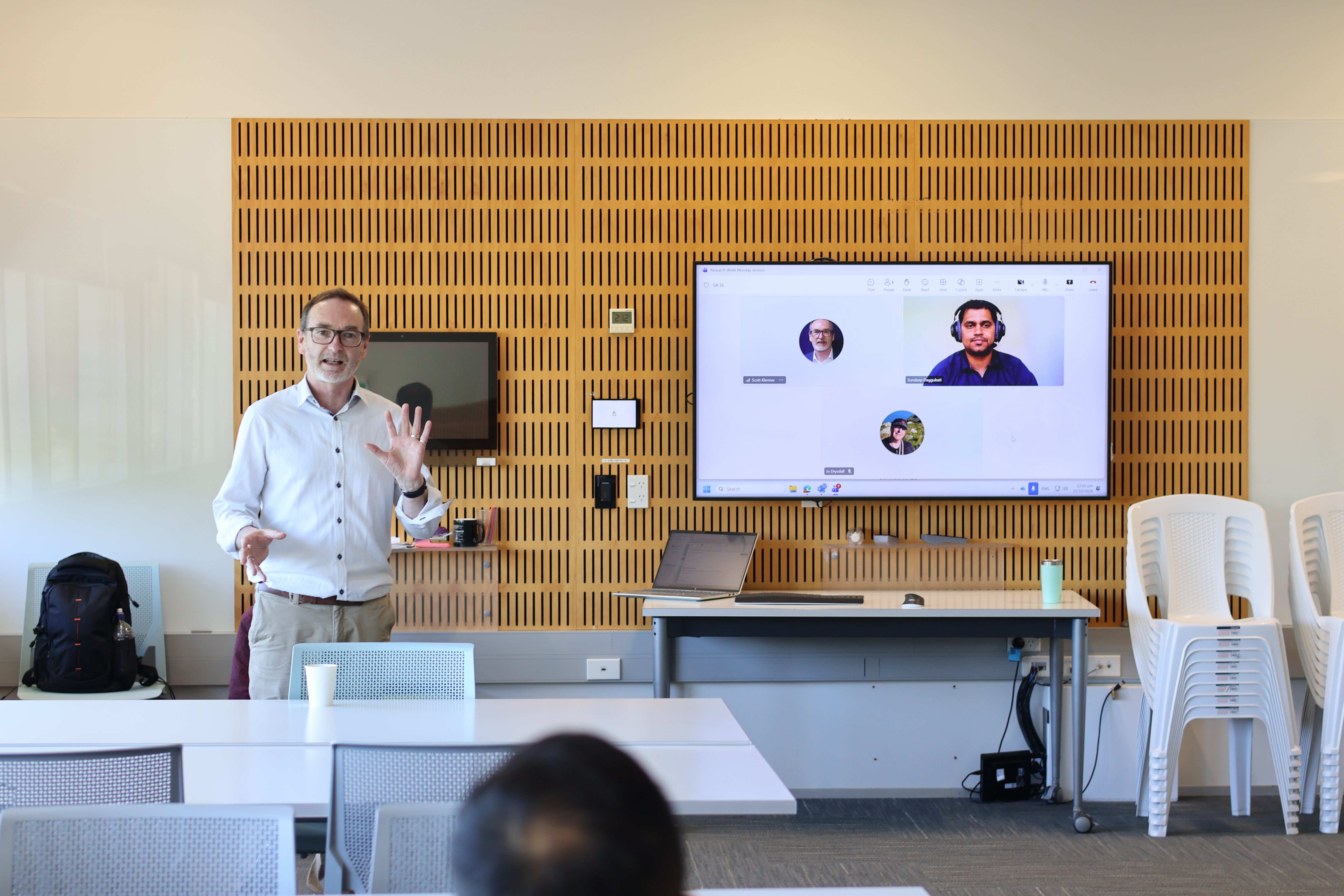
Scott Klenner, Ara's Research Manager, introduces Sundeep Daggubati and Dr Peter Olsen, who kick-started Ara Research Week, sharing research insights and practical perspectives with colleagues
Researchers from across Ara are offering lunchtime sessions this week to share ideas, showcase their work and explore how research in vocational education is creating real-world impact. The week gives colleagues a chance to share what they've learned and practise presenting ahead of upcoming conferences.
The week will culminate in Ara's inaugural Three-Minute Thesis Competition, where participants will be challenged to communicate complex ideas in just three minutes.
This year's programme highlights the breadth of research taking place across the institute. Topics range from post-earthquake regeneration and inclusive healthcare research to artificial intelligence in education, sustainability, engineering innovation and creative practice.
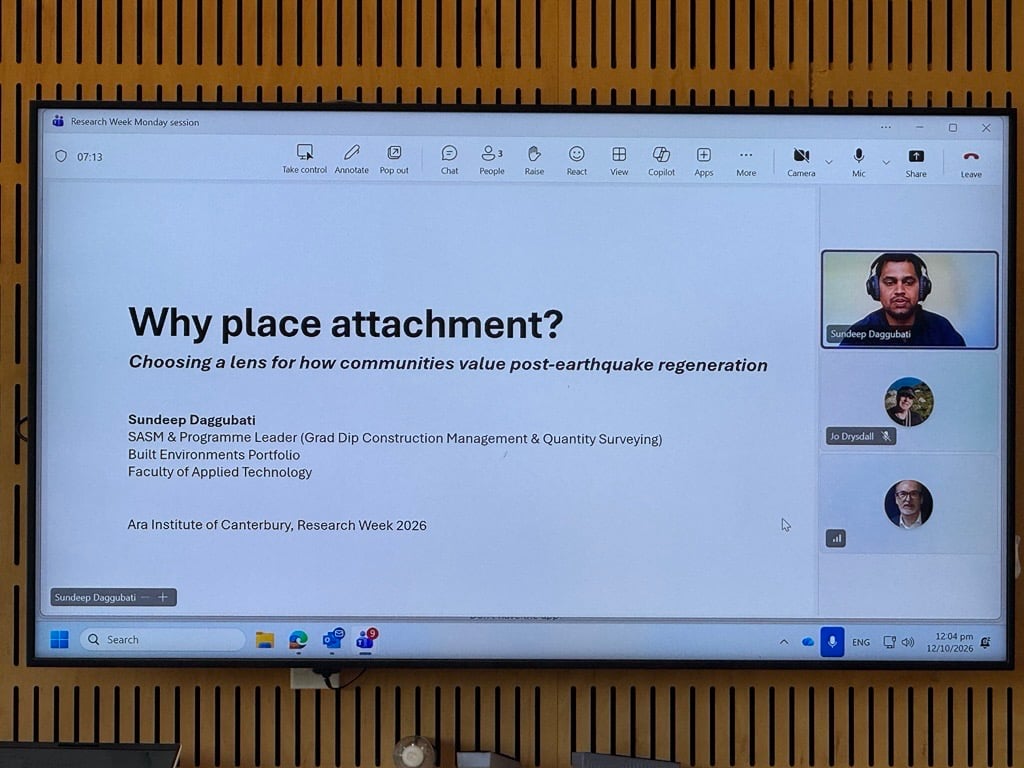
Sundeep Daggubati presented his research on place attachment and post-earthquake regeneration to colleagues online
The week opened with presentations from Built Environment senior academic Sundeep Daggubati, who explored how communities value post-earthquake regeneration through the lens of place attachment. Measuring attachment means measuring how people feel, he explained, and that is a subjective experience that doesn't fit traditional parameters. He described the work as useful for "anyone interested in studying community perceptions".
Sport and Exercise Science principal academic Dr Peter Olsen followed with a talk on how to build a positive research culture and the benefits of doing so. Research lets you turn an intangible idea into something tangible, he said, and it brings intellectual stimulation, but research done only to be compliant is hard going. His group has found that management support and protected hours, along with notes and minutes, keep the team accountable. He also pointed to building informal and formal connections and giving the research lead licence to lead.
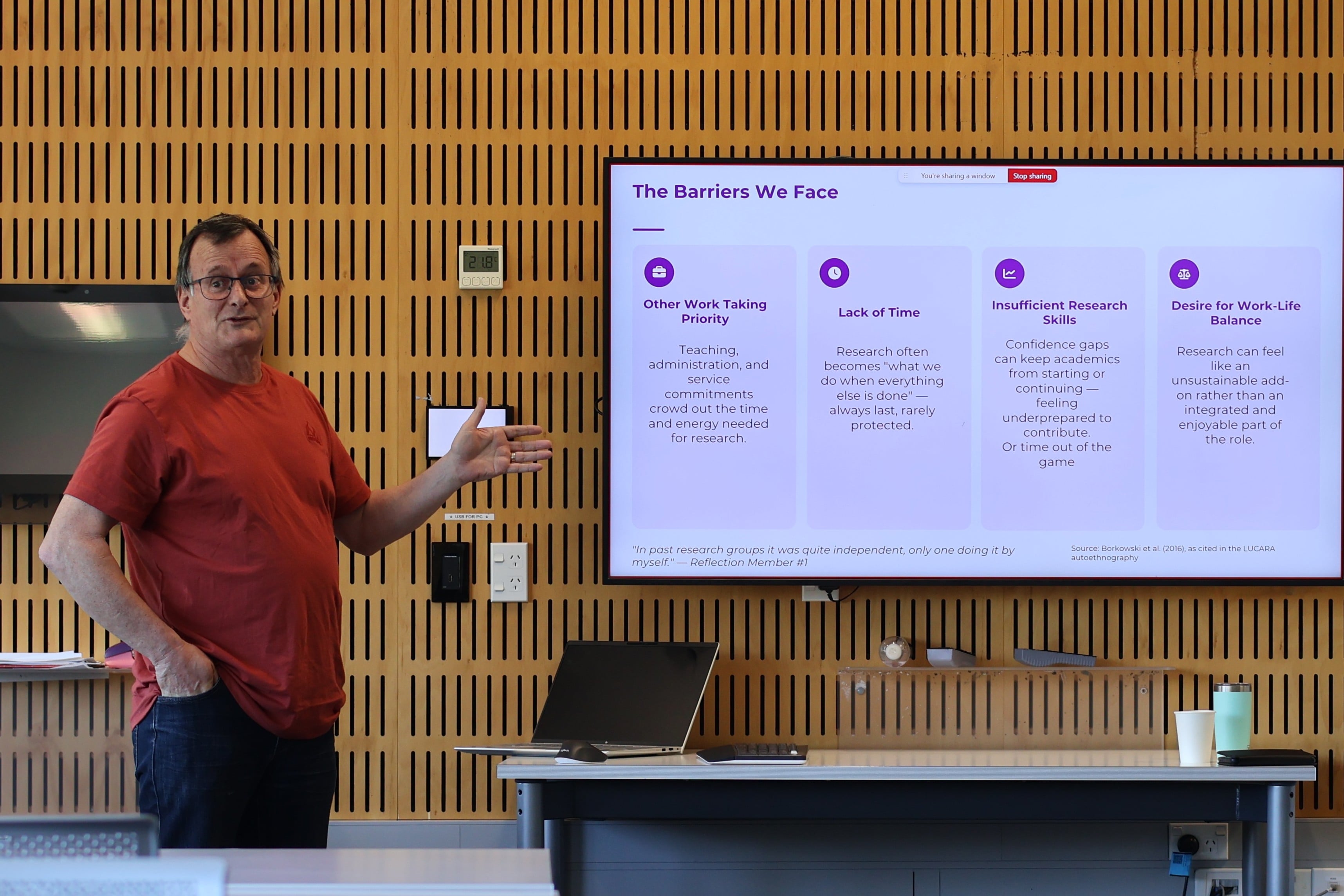
Dr Peter Olsen outlines the barriers to completing research
The Tuesday lunchtime session on Ara’s Manawa campus will feature Joanna Cobley's work on connecting research with teaching and placements, and Rea Daellenbach's reflections on diversity and inclusivity in the Birthing Whānau study
Wednesday's session will see Dr Amit Sarkar examine the opportunities and challenges of AI in education, while Graeme Harris showcases engineering research into high-performance methanol-fuelled engines.
On Thursday, Drs Tony McCaffrey and Allen Hill will explore topics ranging from performance and learning disability to sustainability in a changing world.
The programme concludes with a panel discussion featuring Joanna Cobley, Peter Olsen, Emma Fairs, Bruce Russell and Allen Hill, who will discuss the opportunities and challenges of developing meaningful research programmes alongside teaching, leadership and community engagement.
Researchers will then put their communication skills to the test in Ara's inaugural Three-Minute Thesis Competition. Six candidates will have just 180 seconds to bring their research to life for an audience, demonstrating how complex ideas can be made engaging, accessible and relevant in a small window of time.
Together, the events showcase the diversity of research taking place across Ara and the contribution it makes to learners, industry and communities.
Ara’s Three-Minute Thesis competition – Friday 16 October
Room W209, Whareora, City campus
From nursing education to Olympic sports integrity, Ara researchers will tackle a unique challenge: explaining their work in just three minutes.
Participants:
- Noel Walker – Improving learning outcomes for first-year nursing students.
- Sundeep Daggubati – Understanding belonging and value in post-earthquake Christchurch.
- Vimesh Paudel – The growing role of timber in building design.
- Kim Lowe – Connections between visual arts practice, Te Wā and the Dao.
- Kim Wood – The relationship between performance and place.
- Andrew Hercus – Protecting the integrity of competition at the Olympic Games.