Ara launches new pathway into booming games and animation industry
06 November, 2026
New Game Animation degree opens a pathway for emerging creatives into New Zealand’s billion-dollar games industry.
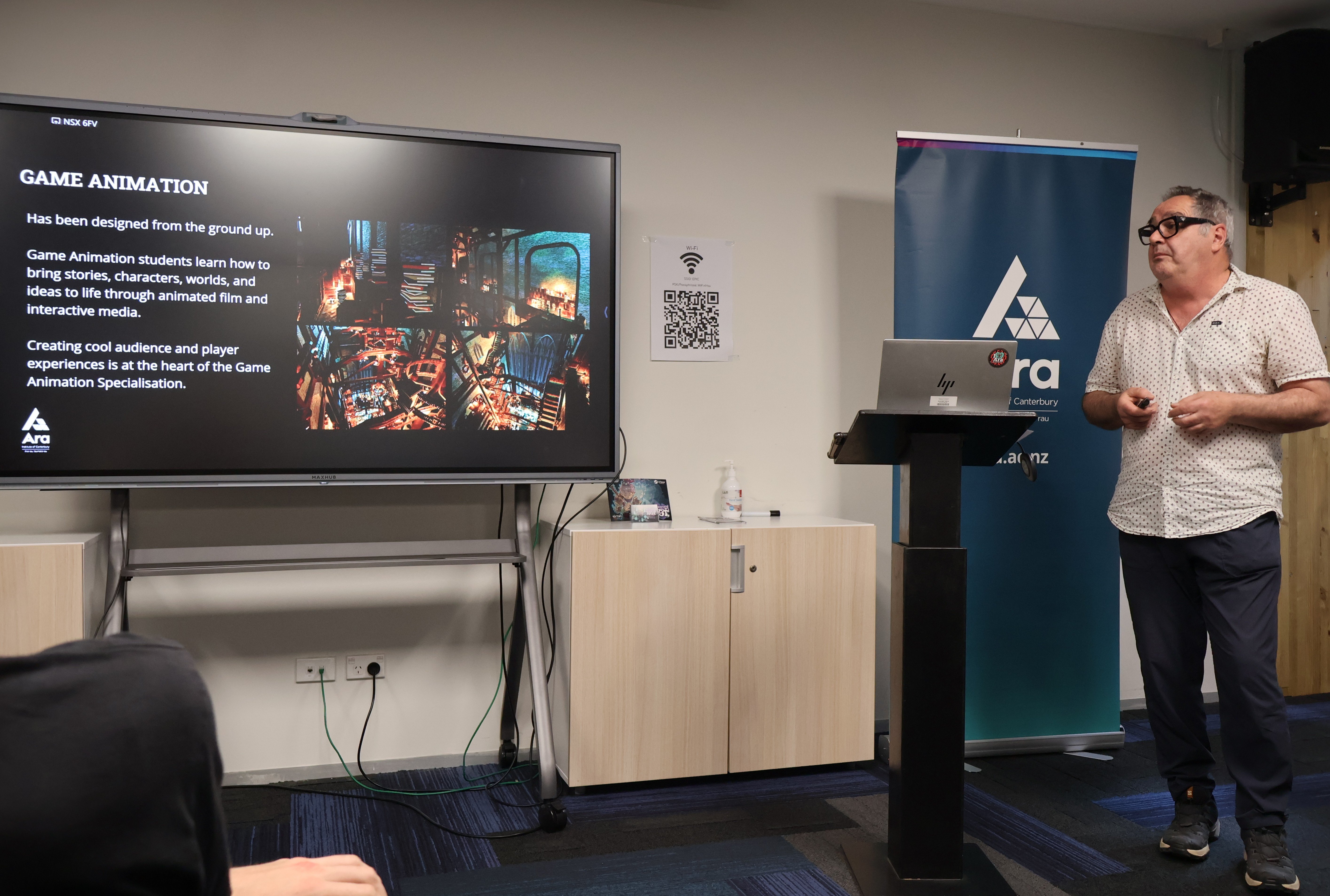
Ara Creative and Media Portfolio Manager Mark McEntyre addresses the EPIC centre launch event.
Recent Ara motion design graduate Sophia Rainey is making waves in the competitive games industry.
But hearing what the next generation of game creatives will have at their fingertips through the new Bachelor of Design (Game Animation) has her wishing she could do it all again.
“I was sitting there thinking, ‘I want to go back to Ara now,’” she said.
Rainey was among industry representatives, Ara kaimahi (staff), prospective ākonga (students) and local game development success stories gathered at Christchurch’s EPIC Innovation Centre for the programme’s official launch.
Her enthusiasm captured the energy around a new pathway opened as New Zealand’s game development sector celebrates becoming a billion-dollar industry, according to the New Zealand Game Developers Association’s 2026 survey.
Offered through Ara’s Bachelor of Design, the new Game Animation specialisation brings together visual storytelling, character and world creation, 2D and 3D animation, game design and interactive production.
Ara Creative and Media Portfolio Manager Mark McEntyre said extensive industry consultation had informed its development.
“Game animation doesn’t sit in isolation at Ara. It’s part of a wider creative ecosystem spanning visual communication, fashion and applied visual arts, giving students opportunities to work across disciplines, combine digital and analogue approaches and collaborate with people who bring different creative strengths,” McEntyre said.
Students will move into practical, studio-based learning from the outset, taking ideas from concept and storyboarding through design, modelling, animation and interactive production. Collaborative projects will increasingly simulate a creative studio, with students taking different roles and working through structured production processes.
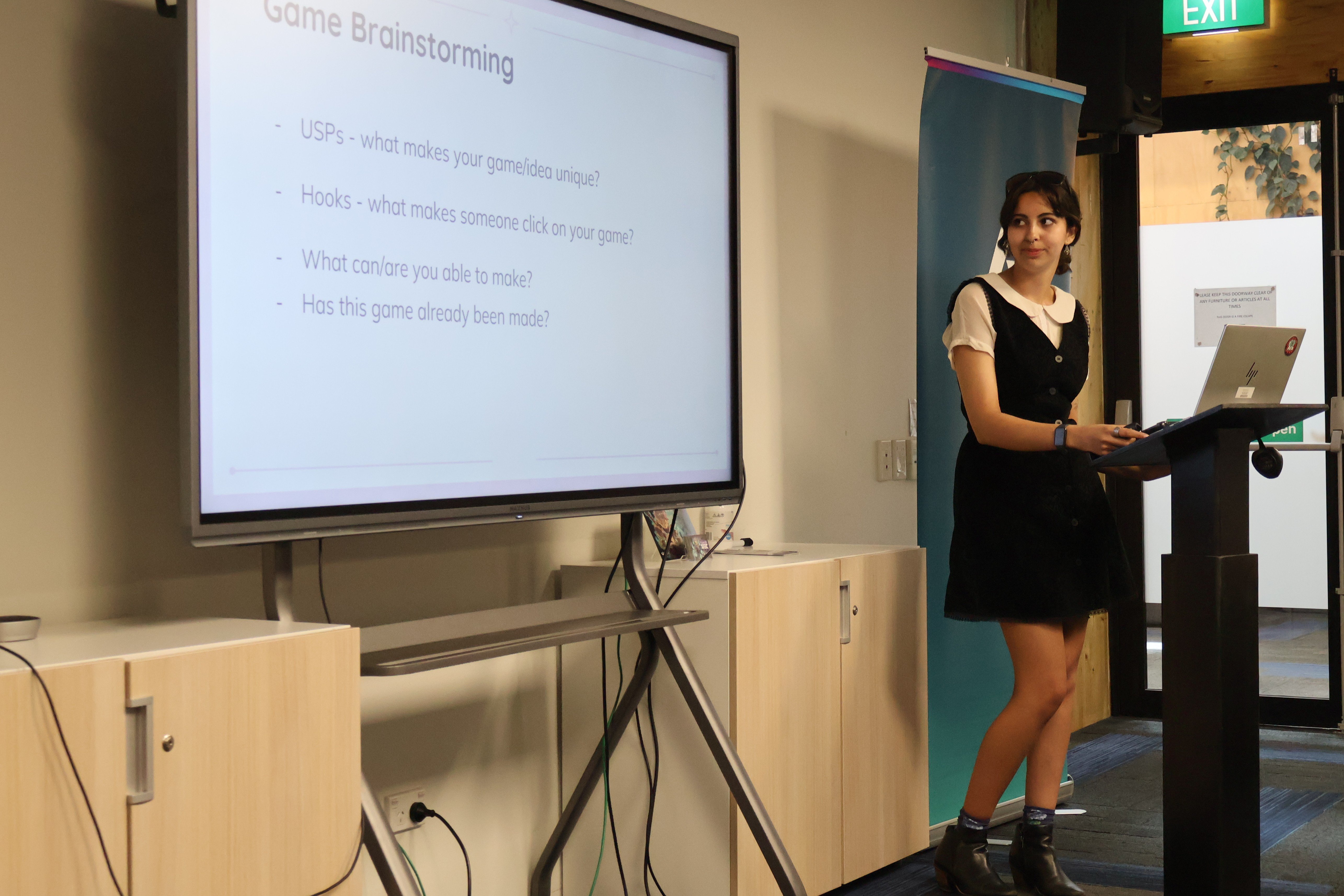
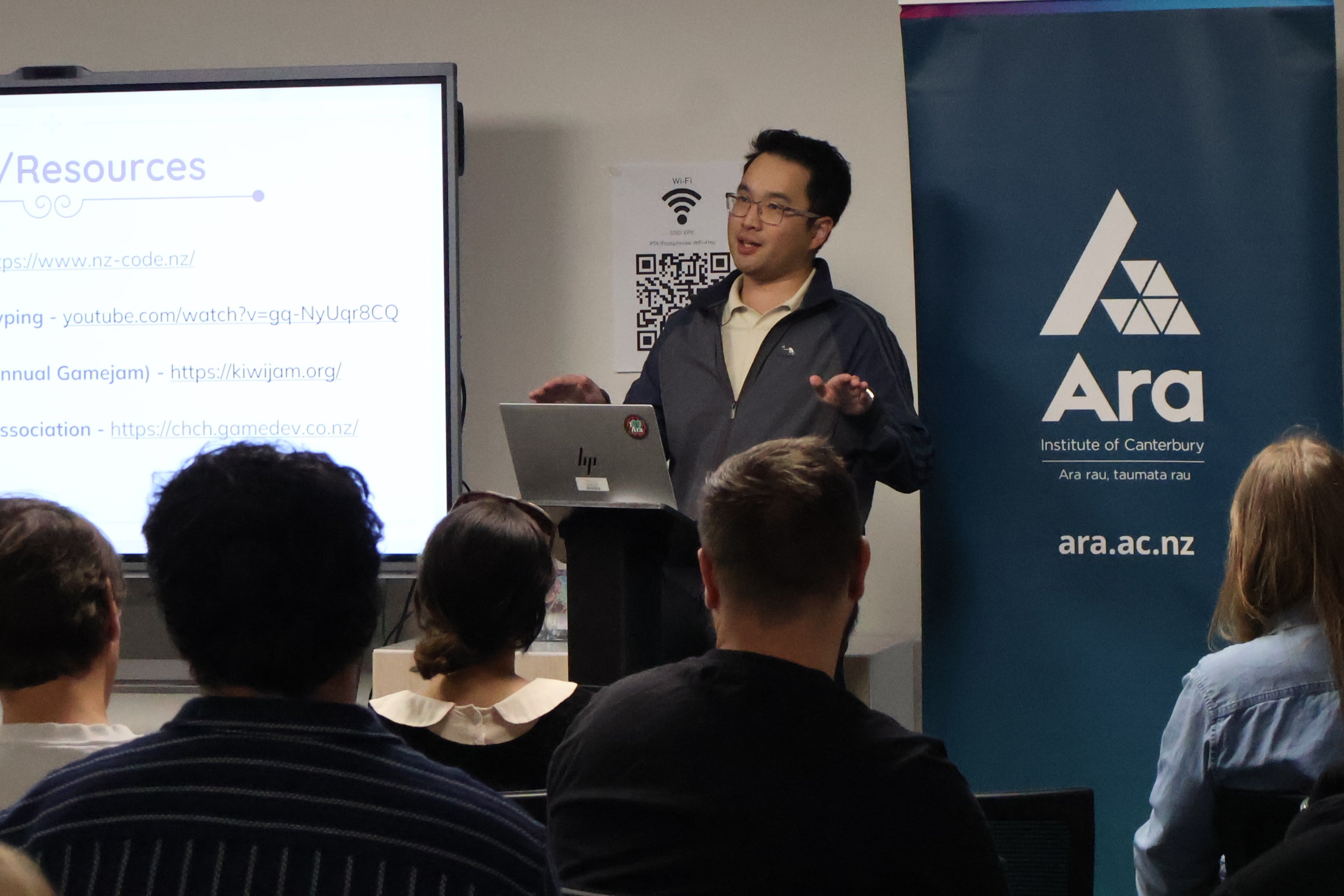
Speakers at the launch included Sophia Rainey from Paperbush Studio Ltd (left) and Team Trifold Creative Director Jed Uy (right).
Creative and Media academic Hawick Inkster said storytelling would provide the programme’s foundation.
“Tools will continue to change, but industry will always need people who can tell compelling stories, think creatively, solve problems and understand how their contribution connects with the work of others,” Inkster said.
Ara graduate Jed Uy, who has returned as an industry adviser for the new specialisation, sees that human creative element as increasingly important.
Uy’s latest role is Creative Director of recently launched Team Trifold, an independent studio operating under the Saltworks Entertainment label.
He said the games industry was calling for more creatives with stories to tell, lived experiences to share and creative instincts shaped by a genuine appreciation of media and storytelling.
“The world is changing in ways we could never have imagined, but I believe that at this moment the need for earnest human voices is necessary and will ultimately resonate with people the most,” Uy said.
Rainey is now leading development of Whispers of the Atelier through Paperbush Studio Ltd, which recently received a $60,000 grant from the Centre of Digital Excellence (CODE). The funding has enabled her to work full-time on the project with her team.
Looking back at her own path into the industry, Rainey said the new programme includes some of the learning she wishes had been available to her earlier.
“Especially with the production pipeline and being able to cross over the courses, I think that’s really valuable, so people can tailor their degrees to exactly how they want them to be,” Rainey said.
She described games as a growing but competitive industry and said specialised learning, mentoring and industry connections could help students find their way into it.
For Inkster, that combination of creative development, industry connection and practical experience is at the heart of the new degree, helping students turn their creative instincts into professional strengths.
“By the time they graduate, we want them to be able to talk about the work they’ve produced, the teams they’ve contributed to, the problems they’ve solved and the specialist strengths they can bring to a project,” he said.
The Bachelor of Design (Game Animation) includes industry engagement, work-integrated learning and a substantial self-directed project alongside its studio-based teaching.
Applications are now open through the Ara website: Bachelor of Design (Game Animation).